 By Saurav Mehra
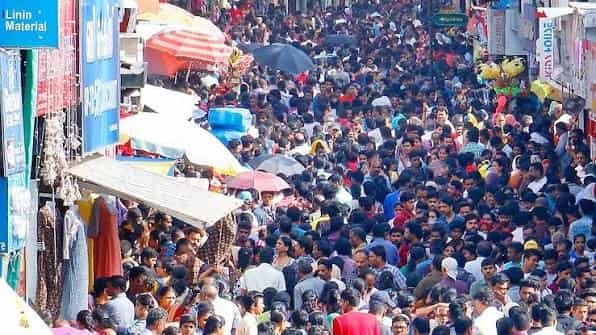
 There’s a bronze statue of a writer standing at one end of S.M. Street, facing down the road he made famous. S.K. Pottekkat wrote an entire novel about this street — Oru Theruvinte Katha, “The Story of a Street” — and five centuries after Gujarati sweetmakers first set up shop here on the Zamorin’s invitation, it’s still doing exactly what it did then: selling sweets, pulling crowds, and refusing to modernize past a certain point.
| Quick Facts | Details |
| Also known as | Mittai Theruvu / Sweet Meat Street |
| Location | Kozhikode city centre, Kerala |
| Length | Approx. 2.1 km |
| Nearest railway station | Kozhikode Railway Station (approx. 800 m) |
| Nearest bus stand | Kozhikode KSRTC Bus Stand (approx. 2.2 km) |
| Nearest airport | Calicut International Airport (approx. 29 km) |
| Vehicle access | Fully pedestrianised |
| Best known for | Kozhikodan halwa, banana chips, textiles |
A Street Older Than the City’s Modern Map
S.M. Street’s story starts with the Zamorins of Kozhikode, who invited Gujarati sweetmakers to open shops just outside the palace walls. Those halwa stalls gave the street its English name — legend has it the deep red ghee halwa looked enough like cuts of meat that British visitors started calling it “Sweet Meat Street,” and the name stuck even after the sweet itself became the main attraction rather than a curiosity.
What’s remarkable is how much of that original character survived. Some of the buildings lining the street are well over a century old, and the street still holds a 160-year-old Parsi fire temple — Kerala’s only one — tucked in among the shops, a quiet holdover from when Kozhikode’s port drew traders from Persia, Arabia, China, and eventually Portugal.
Where the Street Sits
S.M. Street runs through the very centre of Kozhikode city, stretching roughly 2.1 km and eventually turning into Big Bazaar Road toward its far end. Mananchira Square, the city’s central park and one of its most recognisable landmarks, sits directly across from it — close enough that most visitors combine the two into a single walk.
Getting to S.M. Street
Kozhikode Railway Station is genuinely close — around 800 metres away, roughly a ten-to-thirteen-minute walk depending on which stretch of the street you’re heading to. For a city this size, that kind of proximity between a main station and the central market is unusual, and it’s a big part of why the street stays busy with out-of-town visitors, not just locals.
Beyond the train:
- Bus: Kozhikode KSRTC Bus Stand sits about 2.2 km away, with city buses and autos covering the gap easily.
- Air: Calicut International Airport is roughly 29 km out — expect a 45-minute-to-an-hour drive depending on traffic, followed by the same short walk or auto ride from wherever your taxi drops you.
- Auto/cab: Since the street itself bars vehicles, autos and taxis can only drop passengers at either end. From there, you’re on foot regardless of how you arrived.
There’s no ambiguity about driving in — you simply can’t. S.M. Street has been a pedestrian-only zone for years, and vehicles are stopped well before they reach the shopping stretch itself.
Shops and What the Street Is Famous For
Halwa comes first, and it isn’t close. Kozhikodan halwa — dense, chewy, made in colours and flavours that go well beyond the classic dark red — has entire shopfronts dedicated to nothing else, some run by families who’ve been making it the same way for generations. Banana chips run a close second, fried fresh and sold by weight from stalls that will let you taste before you commit to a kilo.
Past the sweets, the street turns into something closer to a general market. Textiles, ready-made garments, footwear ranging from rubber sandals to formal leather shoes, glass and gold bangles, kitchenware, spices, cosmetics, electronics — S.M. Street’s actual reputation among locals has less to do with any single product and more to do with the fact that you can walk in needing almost anything and walk out having found it. A handful of old, family-run restaurants dot the street too, including long-standing names like Top Form, useful stops if the halwa-tasting has worked up a real appetite.
Nearby Areas Worth Visiting Together
Mananchira Square sits right across from the street and is worth the short detour on its own — a landscaped public park with a musical fountain, built around a historic tank that once supplied water to the Zamorin’s palace.
Kozhikode Beach, a short auto ride from the street, offers the coastal contrast to S.M. Street’s dense market energy — a good spot for an evening walk after a day of shopping.
Big Bazaar Road, which the street effectively becomes at its far end, continues the same commercial stretch with a slightly different mix of shops, mostly household goods and hardware.
Kappad Beach, roughly 18 km out, is a longer trip but holds real historical weight — it’s where Vasco da Gama is believed to have landed in 1498, tying back to the same trade history that shaped S.M. Street itself.
FAQs
Q1. How far is S.M. Street from Kozhikode Railway Station?
About 800 metres — a ten-to-thirteen-minute walk, making it one of the more walkable station-to-market distances in any major Kerala city.
Q2. Can I drive to S.M. Street?
No. The street is fully pedestrianised, and vehicles are stopped before entering. Autos and taxis can only drop you at either end.
Q3. What should I buy on S.M. Street?
Kozhikodan halwa and banana chips are the signature purchases, but the street also carries textiles, footwear, jewellery, and household goods.
Q4. Is S.M. Street crowded year-round, or mainly during festivals?
It stays busy on ordinary days, though weekends and festival periods bring noticeably heavier crowds — worth avoiding if you’d rather shop at a relaxed pace.
Q5. What is the Parsi fire temple doing in the middle of a Kerala market street?
It’s a leftover from Kozhikode’s centuries as a major trading port, when Parsi merchants settled in the city alongside Arab, Chinese, and European traders. At around 160 years old, it’s the only Parsi fire temple in Kerala.