 By Pradeep Singh
 Walk past Adam’s Kebab Shop on Phears Lane, just off Zakaria Street, and you’re standing at a stall that’s been grilling suta and boti kebabs for roughly 150 years — older than most of the buildings around it. That’s the thing about Zakaria Street: it looks like a narrow, unremarkable lane on a map, but it’s been feeding Kolkata since before Independence, and the shopfronts haven’t changed hands nearly as often as the rest of the city around them.
Zakaria Street at a Glance
| Detail | Information |
| Location | Chitpur, Central Kolkata (Burrabazar district) |
| Connects | Rabindra Sarani to Chittaranjan Avenue |
| Nearest metro | MG Road — approx. 0.5 km |
| Alternate metro | Central metro station |
| Landmark | Nakhoda Masjid (built 1926) |
| Best known for | Mughlai/Awadhi street food, Ramzan food market |
| Peak season | Ramzan evenings; also busy on Fridays and Eid |
A Street Built Around One Mosque
Zakaria Street takes its name from Haji Nur Muhammad Zakaria, a 19th-century Kutchi Memon trader who settled in the area and became custodian of the community’s places of worship. He commissioned what would become the Nakhoda Masjid — construction finished in 1926, after nearly two decades of building and rebuilding — and the lane leading up to it eventually took his name. The mosque still anchors the street today: its red sandstone facade and towering minarets, modelled loosely on Mughal architecture, make it the tallest thing you’ll see for several blocks in any direction.
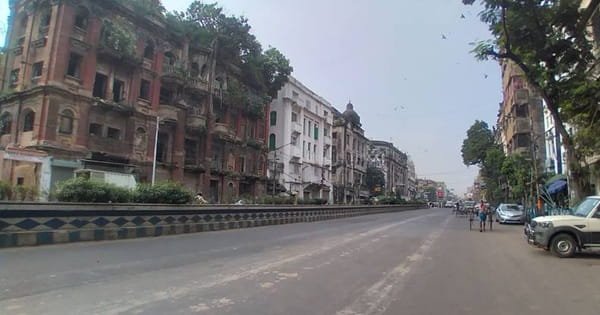
The street sits inside what was historically called “Black Town” during the colonial period — the part of Calcutta the British administration kept separate from their own White Town further south. That history still shapes the neighbourhood’s character: dense, old, and largely untouched by the glass-and-concrete redevelopment that’s swallowed other parts of central Kolkata.
Where Zakaria Street Is
Zakaria Street runs through central Kolkata, connecting Rabindra Sarani on its western end to Chittaranjan Avenue on the eastern end. It falls within the Chitpur locality, one of the oldest settled parts of the city, and sits inside the larger Burrabazar business district — Kolkata’s wholesale trading hub. The postal code for the area is 700073.
Mohammad Ali Park sits just a short walk from the street, and College Street’s book market is close enough to combine into the same trip if you’re spending a day in this part of the city.
Getting to Zakaria Street
The nearest metro station is MG Road, roughly half a kilometre away — close enough for a five-to-ten minute walk once you factor in Kolkata’s narrower, more crowded footpaths near Chitpur. Central metro station works as an alternative, sitting about the same distance out on the other side.
Beyond the metro:
- Bus: CSTC buses stop near Chittaranjan Avenue, on the street’s eastern edge, and connect fairly directly to most other parts of central and north Kolkata.
- Train: Sealdah and Howrah are both accessible by taxi in fifteen to twenty minutes depending on traffic, useful if you’re arriving from outside the city.
- Auto/taxi: Widely available, though drivers will usually drop you at Nakhoda Masjid rather than a specific address — the lanes get too narrow for vehicles once you’re deep inside.
One practical note: private vehicles are a genuine liability here. The lanes around Zakaria Street were laid out for foot traffic and handcarts long before cars existed, and parking is close to nonexistent during peak hours. Metro plus a short walk beats driving in almost every case.
Shops, Food, and What the Street Is Known For
Zakaria Street runs on food, and it has for generations. Old-standing eateries — Bombay Hotel, Royal, Sufia among them — serve beef and mutton kebabs, chaanp, and breads like bakarkhani and sheermal on a daily basis, not just during festival season. Adam’s Kebab Shop on Phears Lane is the one most food writers point to first, largely because of its age, but there are dozens of smaller stalls along the same stretch doing versions of the same dishes with their own decades-old recipes.
During Ramzan, the entire character of the street changes. What’s normally a busy but manageable lane turns into one of the city’s biggest evening food markets, with stalls selling haleem, phirni, sheer kurma, roomali roti, and nihari lining both sides from dusk until well past midnight. Locals describe it as controlled chaos — giant kadhais bubbling over open flame, strings of star-and-moon decorations overhead, and the call to prayer from Nakhoda Masjid cutting through the noise every few hours.
Outside of food, the street and its surrounding lanes carry attar (perfume oil) shops, small jewellery counters, and dry goods stores catering to the neighbourhood’s largely Muslim, trade-focused population. This isn’t a shopping destination in the mall sense — it’s closer to a working market that happens to also be one of Kolkata’s most photographed streets.
Nearby Areas Worth Visiting Together
⇒ Chitpur / Rabindra Sarani wraps around Zakaria Street on its western side and is worth exploring on its own — it’s one of the oldest continuously inhabited stretches in the city, lined with old printing presses, traditional shops, and buildings that have barely changed in a century.
⇒ Burrabazar extends south from Zakaria Street and functions as Kolkata’s largest wholesale market, dealing in everything from textiles to hardware. It’s dense, loud, and not really built for casual browsing, but worth a walk-through if you’re curious about how the city’s trade economy actually runs.
⇒ College Street, home to Kolkata’s famous secondhand book market and Presidency University, is close enough to fold into the same outing — a fairly different pace from Zakaria Street’s food-focused energy, but only a short auto ride away.
⇒ Chittaranjan Avenue, at the street’s eastern end, is a wider, better-connected road that gives you easier access to buses heading toward other parts of central and north Kolkata.
⇒ Mohammad Ali Park, just off the main lane, offers a rare bit of open, green space in an otherwise tightly packed part of the city — a reasonable spot to pause if you’ve been walking for a while.
FAQs
Q. Is Zakaria Street only worth visiting during Ramzan?
No. The famous night market is a Ramzan-specific event, but the kebab shops and eateries here operate year-round, and several — like Adam’s Kebab Shop — have been doing so for well over a century.
Q. How do I reach Zakaria Street by metro?
Take the metro to MG Road station and walk roughly half a kilometre. Central station works as a backup if you’re coming from a different line.
Q. Is it safe to drive to Zakaria Street?
Driving isn’t recommended. The lanes are narrow, parking is scarce, and the area gets extremely crowded during evenings and festival season. Metro plus a walk, or an auto for the last stretch, works better.
Q. What food should I try there?
Beef and mutton kebabs, chaanp, biryani, haleem, and sheermal are the standouts. During Ramzan, phirni and sheer kurma are also worth seeking out.
Q. Is Zakaria Street crowded on regular days?
Yes, though nowhere near Ramzan levels. The street sits inside the busy Burrabazar trading district, so daytime footfall stays high even outside festival season.