 By Saurav Mehra
 Cattle wandering past bridal boutiques. Rajasthani pickle vendors setting up beside gold jewellery shops. Auto-rickshaws honking through lanes that could just as easily be Jaipur or Jodhpur, if not for the Tamil signboards mixed in among the Gujarati and Rajasthani ones. Mint Street, believed to be Chennai’s longest street at roughly 2.6 km, is a genuinely singular experience — a slice of North Indian small-town trading culture transplanted into the heart of South India.
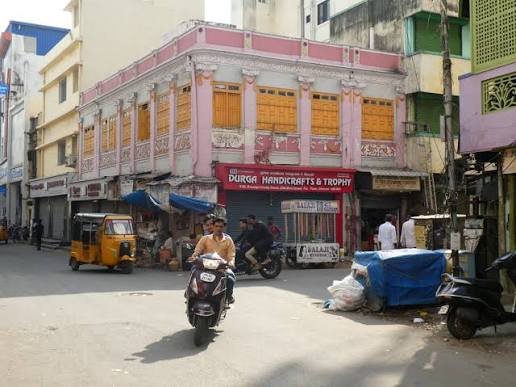
From Coin-Minting Operations to India’s Textile Melting Pot
Mint Street takes its name from British-era coin-minting operations established in the 1840s by the East India Company, giving this now-iconic commercial road its distinctly unglamorous origin story. It sits within Sowcarpet, part of George Town, a locality whose own history stretches back to the 17th century, when Gujarati immigrants from Saurashtra — originally established as a weaving community in Madurai and Tirunelveli — first settled here. Diamond and silk merchants from Gujarat followed in the 18th century, giving the neighbourhood its name, and Marwaris from Rajasthan arrived later still, adding yet another layer to the area’s trading culture.
By the 1950s and 1960s, Sowcarpet, including Mint Street, had become a genuine centre for textile trading, reflecting the broader post-independence push toward small-scale industries and markets. The influx of North Indian migrants through the 1960s and 1980s — Marwaris, Jains, Rajputs, and Agarwals among them — further shaped the street’s commercial character, with many communities starting out as pawn-brokers before expanding into textiles, jewellery, and dry goods. Today, Mint Street stands as a genuine melting pot of Gujarati, Marwari, Jain, and other North Indian communities, earning Sowcarpet its popular nickname of “Mini Rajasthan.”
Mint Street Overview
| Category | Details |
| Location | Sowcarpet, George Town, Chennai — 600079 |
| Believed length | Approx. 2.6 km — Chennai’s longest street |
| Name origin | British-era coin-minting operations (1840s) |
| Nearest metro | High Court, Mannadi (Blue Line) |
| Nearest railway | Chennai Central (1–2 km), Chennai Beach |
| Nearby bus/transit | Central Station Bus Stop, Anna Square MTC Terminus |
| Connectivity rating | 4/5 |
| Safety rating | 4.1/5 |
| Best known for | Sarees, textiles, bridal wear, imitation jewellery, ready-made garments |
| Notable landmarks | Mint Clock Tower, Jain temples, old trading houses |
| Trading communities | Gujarati, Marwari, Jain, Rajput, Agarwal |
| Also called | “Mini Rajasthan” (Sowcarpet nickname) |
| Bargaining | Standard and expected |
| Best for | Wedding shopping, wholesale and retail textiles |
Where Mint Street Sits
Mint Street runs through Sowcarpet, part of George Town in central Chennai, close to Edapalaiyam and the wider Parry’s Corner commercial cluster. Its proximity to Chennai Central Railway Station, roughly 1 to 2 km away, along with Chennai Beach Station and the Madras High Court, gives it a genuinely central yet distinctly old-world character. The presence of Jain temples, traditional trading communities, and the area’s overall bustling market energy give Mint Street a cultural feel that seems almost timeless against the rest of modern Chennai.
Getting to Mint Street
High Court metro station and Mannadi metro station, both on the Blue Line, are the nearest options, from where a short auto-rickshaw ride covers the remaining distance into Sowcarpet’s dense lanes.
Beyond the metro:
- Rail: Chennai Central, roughly 1 to 2 km away, and Chennai Beach Station both serve the wider area, useful for those arriving by suburban or long-distance train.
- Bus: Central Station Bus Stop and Anna Square MTC Terminus are among the nearby transit points, alongside numerous MTC routes serving George Town.
- Auto/taxi: The most commonly recommended way to reach Mint Street directly, given how narrow the internal lanes get.
- Parking: Genuinely challenging due to narrow streets and heavy foot traffic — public transport or drop-off services are consistently advised over self-driving.
Given how dense and pedestrian-heavy Mint Street and the surrounding Sowcarpet lanes are, most visitors find that arriving by metro or train and covering the final stretch by auto or on foot works considerably better than attempting to drive in directly.
Shops and What the Street Is Known For
Textiles and bridal wear are Mint Street’s defining trade, and the range is genuinely comprehensive. The street is described as a wholesale and retail paradise offering fabrics, sarees, ready-made garments, imitation jewellery, household items, electronics, and more, all at competitive prices. Ghagra-cholis, brocaded saris, lehengas, sherwanis, and kurtas fill shop after shop, alongside handcrafted jewellery — bangles, bindis, and belts — catering specifically to wedding and festive shopping needs.
Jewellery deserves particular mention: small shops near the Jain temples stock everything from Afghani tribal jewellery and lotus-shaped jhumkas starting at just ₹40, to affordable temple jewellery, classic glass bangles, gold antique bangles at around ₹120 for half a dozen, and vintage Kasu Peru chokers for as little as ₹200. Fabric shopping runs equally deep — Kalamkari prints, printed cottons, and both traditional and contemporary dresses and tunics start from around ₹500, with specific boutiques like Bhagyashree known for their saree collections. Specialised shops like K2 Aariwork Blouse offer custom Aari embroidery work, a detail-oriented craft popular for bridal blouses, while some shops specifically cater to wholesale buyers — Hiral Jewel, for instance, handles wholesale inquiries for imitation jewellery.
Street food adds another dimension entirely. The area is known for authentic North Indian vegetarian delights — chaats, pav bhaji, Rajasthani pickles, papads, spices, dry fruits, and sweets — a genuine reflection of the community that’s shaped Sowcarpet’s culture over generations. Name boards throughout the street appear in Gujarati, Rajasthani, and Hindi scripts alongside Tamil, and it’s genuinely common to see shopkeepers in traditional kurta and dhoti, with women in lehenga choli or colourful sarees — a cultural texture that makes walking Mint Street feel distinctly different from anywhere else in Chennai.
Nearby Areas Worth Visiting Together
Sowcarpet’s Jain temples, close to Mint Street, add genuine religious and architectural depth to a shopping-focused visit, alongside the Mint Clock Tower and other heritage landmarks.
Parry’s Corner, the broader commercial hub the street connects into, ties together dozens of George Town’s other specialty wholesale streets.
Godown Street and Bunder Street, nearby, extend the shopping options into textiles and stationery respectively.
Chennai Central, just 1 to 2 km away, makes Mint Street genuinely easy to combine with onward travel or a broader George Town heritage walk.
FAQs
Q1. Which metro station is closest to Mint Street, and how do I get there from the station?
High Court or Mannadi metro station, both on the Blue Line, are closest — from either, a short auto-rickshaw ride covers the remaining distance into Sowcarpet.
Q2. Is bargaining expected on Mint Street, and how should I approach it?
Yes, bargaining is a standard, expected part of shopping here, particularly in wholesale and retail textile and jewellery shops — being polite but firm tends to get the best results.
Q3. What’s the best way to shop for wedding items specifically on Mint Street?
Several boutiques specialise in sarees and lehengas, often offering deals like “buy 1 get 1 free,” while jewellery shops near the Jain temples cover everything from affordable imitation pieces to more elaborate bridal sets — it’s worth budgeting extra time to compare a few shops before committing.
Q4. Is it easy to find parking near Mint Street, or should I rely on other transport?
Parking is genuinely difficult given the narrow streets and heavy foot traffic — public transport, auto-rickshaws, or ride-sharing apps with a drop-off are consistently recommended over attempting to drive in and park yourself.